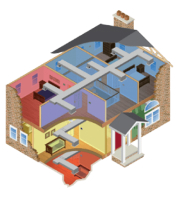

 Chicago local
 Family owned
 Since 1952
Service types
Duct Repair Work We Handle
Common duct repair jobs City & Suburban handles for Chicago homes and businesses.
Final recommendations follow the installed conditions, equipment instructions and applicable Chicago requirements.
Find the failed duct connection
Uneven rooms. Trace the air path.
City & Suburban sends NATE-certified technicians and diagnoses the cause before quoting. A cold bedroom above a warm basement can point to a duct fault, but the symptom alone does not locate it. Duct work repair needs to match the damaged connection or restricted run and the rooms it serves.
Pricing
Duct repair cost. Defined by the damaged run.
An exposed joint and a concealed branch call for different duct repair services. City & Suburban offers upfront pricing with no hidden fees; access, materials, and repair extent shape the scope.
How City & Suburban prices every job
- 1 Diagnosis firstA technician finds the cause before anything is quoted.
- 2 Written price before any workThe exact price, in writing, for approval.
- 3 No hidden feesThe approved price is the price.
- 4 Repair first where repair is rightReplacement only when the evidence supports it.

Financing available
Wells Fargo Home Projects credit card, subject to credit approval.
Open 24 hours, 7 days a week
24/7 service, whatever the size of the job
A small fix or a full breakdown, City & Suburban answers around the clock, every day of the week. Call any time, day or night, and describe the problem.
- Big jobs and small jobs
- Day, night and weekends
- One number: (773) 238-3838
Keep sound ductwork in service
Repair the fault. Replace damaged sections.
Old ducts can be repaired without replacing every run when the surrounding material is sound. City & Suburban diagnoses the cause before quoting and offers upfront pricing with no hidden fees. In an HVAC duct repair, an isolated joint can be secured and sealed. Torn flex duct, weakened metal, or a repeatedly restricted route may warrant replacement of the affected section.
Equipment types
Older runs. Different access needs.
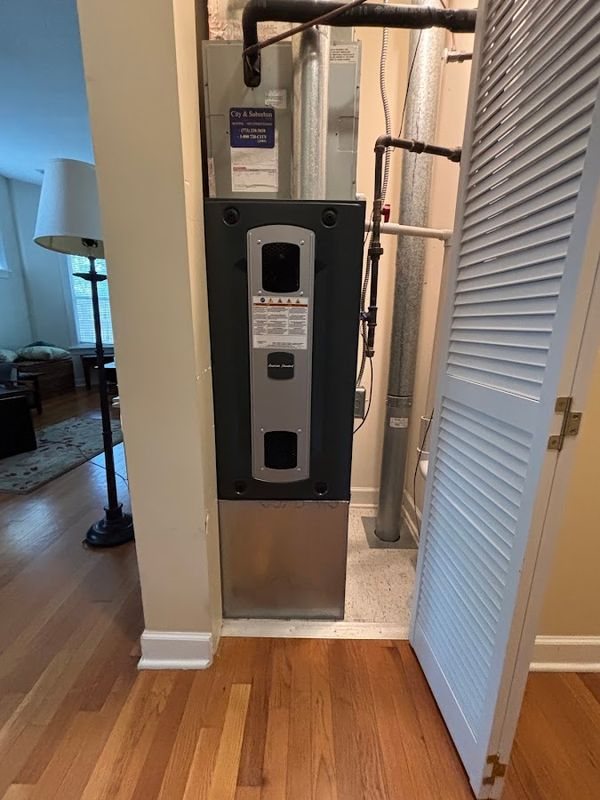

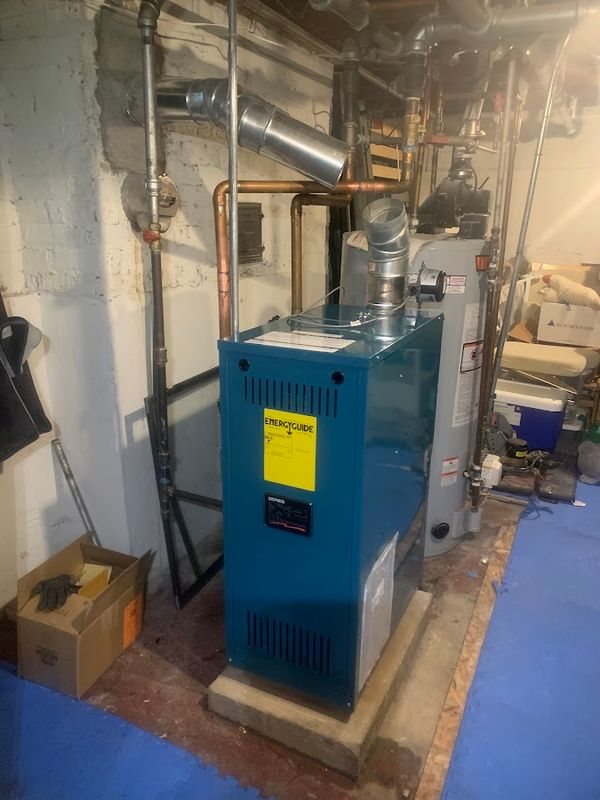
Heating equipment brand installed by City & Suburban

Secure. Seal. Check the affected rooms.
City & Suburban has NATE-certified technicians. Duct sealing closes leaks; duct support holds the run in place. General air duct repair methods include securing and refastening joints, sealing with mastic or UL 181 tape, and replacing crushed flex sections. Sagging runs need wide support straps at manufacturer-specified spacing. Re-checking airflow at affected registers helps identify remaining restrictions.
How it works
How a City & Suburban visit works
-
Reach out Call, text or book online.
 1
-
Pick a time Same-day visits when the schedule allows.
 2
-
On-site visit A technician diagnoses the problem.
 3
-
Honest pricing The price, in writing, before any work.
 4
-
Approved work Only the work you approve, then tested.
 5
-
Clear results Findings and next steps explained.
 6
Reviews
Homeowner reviews. Repair decisions explained.
These reviews describe City & Suburban heating and cooling service, including communication and repair decisions. None is presented as a duct repair testimonial.
“Been using Rob at City & Suburban for a few years now. Always professional, responds and comes out to my home quickly, fixes the issue, and charges a reasonable price for his services. Highly recommend for heating and A/C repair and maintenance.”
“Really nice fast service. I had an issue in a rental that needed to be addressed quickly and I was able to get City and Suburban out right away. They reviewed my options and helped me make the decision between repair and replace. I would definitely call them again and plan to use them for my ongoing maintenance needs.”
“Rob is awesome! We had a furnace issue, not only was he able to diagnose it a quick fashion, but made the repair without breaking our bank. As a result, we’ve hired him to handle our maintenance on both of the units, hire this company wonderful people!”
“My furnace went out, so I contacted City and Suburban Heating and Cooling to set up an appointment to get it checked out. Rob, the service tech, showed up on time to help me out. He told me he had to change out one part to get it up and running again, which he did in a very timely manner. And, without breaking the bank. I would highly recommend City and Suburban Heating and Cooling and will use them again in the future.”
“I had used City and Suburban at my previous condo for furnace and a/c repairs so when my furnace stopped working at my new place I knew who to call and what to expect. They answered on the first call and scheduled an appointment that fit my schedule. Gave me a heads up and arrived on time. Rob quickly diagnosed the problem, explained what was needed, went and grabbed the part and had my heat working in no time. Will absolutely use them again when the time comes.”
“Rob and Eddie were prompt, professional, and proficient. I got a call back within 10 minutes of reaching out. They scheduled me for the following morning and gave me advice on what to do in the meantime. They made the repair itself quick and painless. Couldn't have asked for more! PS: Whatever digital assistant they're using for intake, it's the first bot I've interacted with that was actually... good at its job.”
City & Suburban work in Chicago
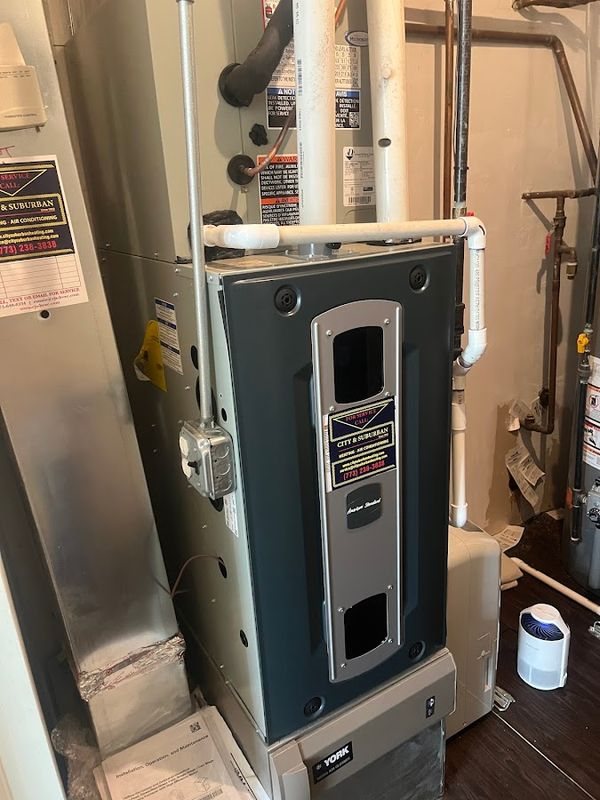
Service areas
Chicago homes. Neighborhoods and suburbs.
City & Suburban serves 21 areas: 13 Chicago neighborhoods and eight suburbs. Identify the building type, affected rooms, and whether the damaged run is accessible.
Chicago neighborhoods
North and northwest suburbs
The service-area links identify coverage. Appointment availability depends on the schedule and the location of the home.
Based in West Town
1225 N Cleaver St, Chicago, IL 60642. Technicians cover the city and the north and northwest suburbs.
Not on the list? Call (773) 238-3838 to check an address outside these 21 areas.
Call City & SuburbanResidential duct repair questions
How are leaking or disconnected ducts actually repaired?
Repair starts at the joints. Loose connections are refastened with sheet metal screws, then sealed with mastic or UL 181 listed foil tape, never cloth duct tape. A supply branch that has pulled off its takeoff collar gets the collar re-secured, or a new collar where the old one is damaged. A fresh mechanical connection goes in either way. Torn or missing insulation is replaced so the sealed joint stays dry and quiet. City & Suburban has NATE-certified technicians, and the repair method should match the duct material and connection type. Sealing is a repair, not a rebuild. A run that is crushed or badly undersized along most of its length needs new duct instead.
How is a duct leak actually found?
By measurement, not by a glance. A useful assessment reads airflow and air temperature at the register in the room that is complaining, then compares them with a room that heats normally. It reads static pressure across the air handler as well, because a leaking return and a clogged filter move that number in opposite directions. The branch is then traced seam by seam until the gap, the dropped collar or the flattened length shows itself. A concealed run inside a wall chase or above finished plaster cannot be cleared by eye, so an access point has to be opened. City & Suburban diagnoses before quoting, which puts the readings ahead of the repair price rather than after it.
Why do far rooms in a two-flat or bungalow stay cold while the furnace runs?
Distance and leakage, usually in that order. Many two-flats, greystones and bungalows were ducted long after the frame went up. Branches travel through balloon-frame wall chases, panned floor joists and old gravity trunks never meant for a blower. Every unsealed seam on that path bleeds heated air into a basement, crawlspace or exterior wall before the register sees it. A front bedroom at the end of a long flex run loses most of its airflow this way. Airflow read at the registers shows which branch is losing its share. That weak branch is then traced back to the trunk it leaves.
Do duct leaks raise a heating bill enough to notice?
Leaks cost twice. Air that escapes a supply joint in an unheated basement never reaches a room. The thermostat then keeps the blower and burner running longer than the heat load requires. Return leaks are worse per square inch, because the system then pulls cold basement air back across the furnace and dilutes what every register delivers. Rental buildings feel this first. Where the landlord supplies heat, the Chicago Heat Ordinance applies. It sets a minimum of 68 degrees from 8:30 a.m. to 10:30 p.m. The overnight minimum is 66 degrees, and both apply between September 15 and June 1 (Municipal Code 13-196-410). A system fighting its own duct losses struggles to hold that in January.
Can crushed or kinked flex duct be repaired, or does it have to be replaced?
Flex duct fails by shape. A kink at a sharp turn, a length squashed behind stored boxes, or a long sagging span all throttle airflow. The duct can look intact from the outside. A crushed inner liner cannot be restored, so the damaged length is cut out and replaced. The new piece is pulled straight and carried on wide straps at the spacing the manufacturer specifies. A torn outer jacket is a smaller fix that can be sealed in place. A flattened section is replaced rather than taped back into shape, and the new run is kept as straight as the joist bays allow.
Does repairing ducts cut down on household dust?
Often yes, because return-side gaps pull unfiltered dust straight into the air stream. Gaps at a return plenum, an unsealed filter slot or a panned joist return draw in dust, loose fiberglass and crawlspace air. That load travels straight past the filter and spreads room to room. Sealing the return side is the part of duct repair that shows up on furniture and shelves. Duct repair belongs alongside filtration and humidity equipment as indoor air quality work. Cleaning the inside of a duct is a separate service and will not fix a leaking return.
How can a homeowner tell a duct fault from a furnace fault?
The pattern of the complaint points one way or the other. Heat that is weak in every room points at the equipment, the filter or the blower. So does a system that short cycles and trips its limit switch. Heat that is normal in some rooms and absent in others, with the furnace running fine, points at the duct path. Whistling at the cabinet, a thump when the blower starts and warm basement joists are duct signs. City & Suburban repairs both furnaces and ductwork, so the diagnosis decides the work. Equipment faults are handled as heater repair rather than duct repair.
What happens on a duct repair visit, and how long does it take?
A useful duct repair visit starts in the room that is complaining and works back along its branch. Readings at the register and at the air handler should set the scope before anything is opened. How long the visit takes depends on access and the number of joints opened. On an exposed basement or crawlspace run, sealing seams, re-securing a dropped branch and swapping flex are reachable repairs. Work behind finished plaster, or a fitting that must be fabricated for an odd gravity trunk, may need a second trip. City & Suburban gives a written price before the work, and same-day appointments are available when the schedule allows.
What decides the cost of duct repair in Chicago?
Access first, then scope. Reaching a joint in an open basement is quick work. The same joint above a finished ceiling, in a tight crawlspace or inside a wall is not. Price then follows the number of connections opened and sealed, and whether sheet metal fittings or new flex must be fabricated. Replaced insulation and any added boots, registers or dampers move it as well. Older wrapped insulation that may contain asbestos stops the job until an abatement contractor has cleared it. City & Suburban prices duct repair upfront with no hidden fees and puts the exact price in writing before work begins. Wells Fargo Home Projects financing is available subject to credit approval.
Is a duct problem ever a safety issue and not only a comfort issue?
Sometimes, and the return side is the reason. A large return leak in a furnace or utility room can pull air away from the appliance vent. Combustion gases then spill into the house instead of rising up the flue. Warning signs include a sooty draft hood and heavy window condensation near the appliance. A carbon monoxide alarm, even one that sounds only while the blower runs, means leaving the building first and calling 911 from outside, then the gas utility. Illinois requires carbon monoxide alarms near sleeping areas under the Carbon Monoxide Alarm Detector Act (430 ILCS 135). A suspected venting problem belongs in the urgent group, not on next week's calendar. City & Suburban offers same-day service when the schedule allows.
What about ducts in a condo or a unit inside a shared building?
Condo work has a boundary. The ductwork and air handler inside a unit often belong to the unit owner, but the condominium declaration and governing documents decide it. Shafts, risers and chases shared with other units usually belong to the association, and need approval before anything is opened. That approval has to be in hand before a shared shaft is opened, which is why the paperwork often sets the date. City & Suburban works on in-unit ductwork across 13 Chicago neighborhoods and 8 suburbs. Brandi C., June 2026: “Carissa was great staying on top of my slow-replying HOA to get the insurance info processed before Rob showed up.”
Does duct repair in Chicago need a City permit?
A repair in kind usually does not. Sealing a seam, re-securing a branch or replacing a damaged length with the same size is work on an existing system. Altering the layout, adding new runs or changing out the furnace or air handler is different work. Those are the jobs that appear in City of Chicago permit records. Whether a permit applies, and who files it, is worth confirming with the City and the contractor. Repairs in kind and alterations also price differently, so the distinction is worth settling at the quote. City & Suburban gives a written price before work starts. If opening a run reveals concealed damage, the scope and price should be revised in writing and approved before extra work goes ahead.
How does a homeowner keep the same duct fault from coming back?
Three habits cover most repeats. Stored boxes, bikes and bins kept clear of flex runs prevent the crushing that throttles a branch in the first place. Filters changed on schedule stop the blower from pulling against a loaded filter and straining the seams behind it. Support straps at the spacing the duct maker specifies stop the slow sag that reopens a joint. One more step pays off before a remodel. Photograph the duct routes while the joists and chases are still open, so nobody guesses behind new drywall later. City & Suburban maintenance plan members get priority dispatch.
What changes after a duct repair is finished?
Results depend on the home, so measure rather than assume. Where access allows, airflow at the repaired register can be read before and after the repair, so the change is documented. The temperature spread between rooms may narrow, but branch length, returns and insulation also affect balance. Runtime depends on the heat load as well as duct losses, so sealing can reduce furnace minutes on a cold night, though the saving varies. A return side that leaks less can also load the air filter more slowly. If a room stays starved after the repair, the remaining restriction needs its own diagnosis. City & Suburban diagnoses before quoting any further work.
What record does City & Suburban bring to duct work in Chicago?
City & Suburban has been family-owned since 1952 and is run by Rob, the second generation of the founding family. NATE-certified technicians do the service work. The company holds a 4.98 average across 204 Google reviews, 4.9 from 251 reviews on Yelp, and an A+ rating with the BBB. Adam L. wrote in September 2025: “Been using Rob at City & Suburban for a few years now. Always professional, responds and comes out to my home quickly, fixes the issue, and charges a reasonable price for his services.”
Follow the symptom. Find the right service.

Arrange duct repair in Chicago
Contact City & Suburban with the affected rooms, airflow changes, and visible duct damage. Accessible connection photos and remodeling details help describe the problem.