
 Chicago local
 Family owned
 Since 1952
Service types
Emergency & Routine Commercial HVAC Repairs Work We Handle
Common emergency & routine commercial hvac repairs jobs City & Suburban handles for Chicago homes and businesses.
Final recommendations follow the installed conditions, equipment instructions and applicable Chicago requirements.
Emergency & routine repair needs
Emergency & routine commercial HVAC repairs.
A store losing heat before opening needs a different response from an office with one warm meeting room. Anyone searching for commercial HVAC repairs near me should know that repairs also cover underperformance and faults found on a scheduled visit. Report affected spaces, operating hours, and whether one system or the whole building has failed. Provide a site contact, access instructions, and the person authorized to approve work. The symptom history helps the technician narrow the fault.
Pricing
Commercial HVAC repairs: price follows diagnosis.
Emergency commercial HVAC service and routine repairs can involve different repair scopes. City & Suburban offers upfront pricing with no hidden fees. Request the diagnosed fault, proposed work, and access requirements before approval. Discuss parts availability and the expected repair sequence when planning a return to normal business operations.
How City & Suburban prices every job
- 1 Diagnosis firstA technician finds the cause before anything is quoted.
- 2 Written price before any workThe exact price, in writing, for approval.
- 3 No hidden feesThe approved price is the price.
- 4 Repair first where repair is rightReplacement only when the evidence supports it.

Financing available
Wells Fargo Home Projects credit card, subject to credit approval; eligibility for business projects must be confirmed.
Open 24 hours, 7 days a week
24/7 service, whatever the size of the job
A small fix or a full breakdown, City & Suburban answers around the clock, every day of the week. Call any time, day or night, and describe the problem.
- Big jobs and small jobs
- Day, night and weekends
- One number: (773) 238-3838
The next decision
Emergency or routine repair. Assess the longer term.
Owners weighing commercial HVAC repairs near me should connect the failed part with the condition of the remaining equipment. A business manager also needs to consider repeat outages and the disruption of a replacement project. City & Suburban diagnoses before quoting. For a larger decision, review commercial HVAC replacement after the current fault is understood.
Equipment types
Different systems. Emergency & routine repair needs.
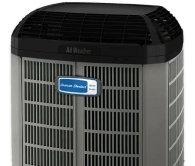
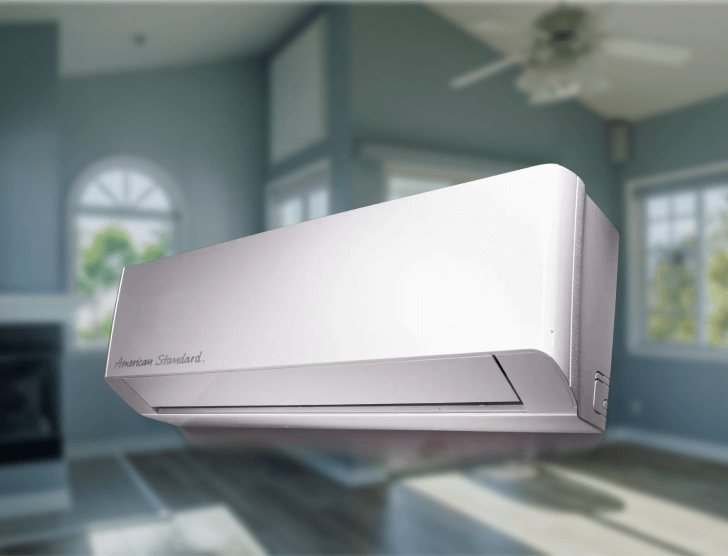
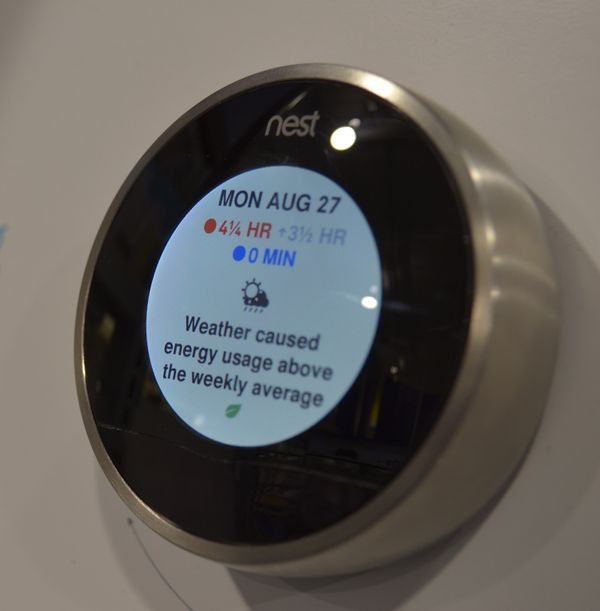
All makes and models repaired

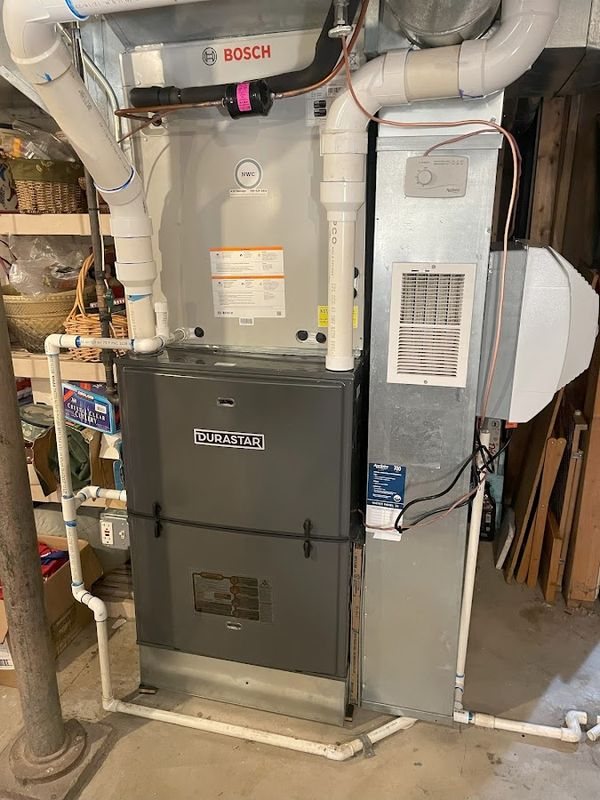
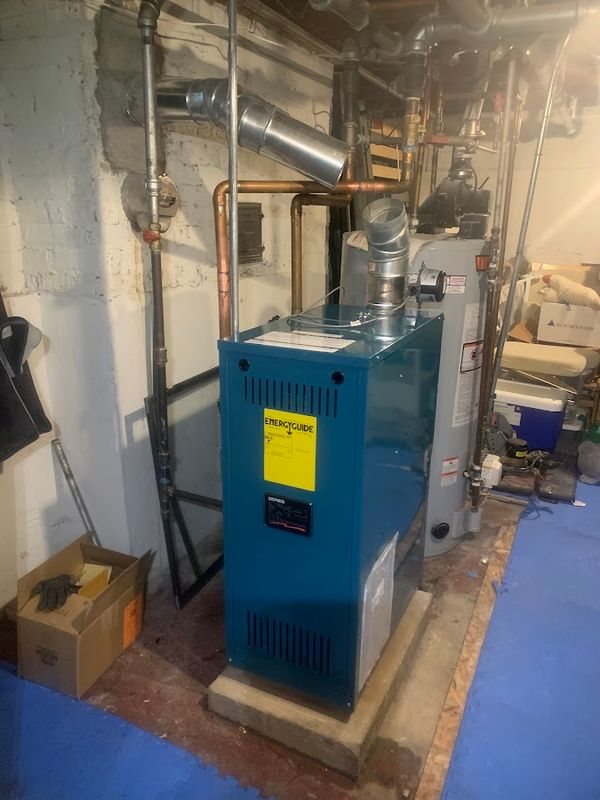
Equipment City & Suburban repairs and replaces.
City & Suburban diagnoses before quoting and puts the price in writing before work. If you are comparing commercial HVAC repair companies near me for emergency or routine work, identify the installed system and request a diagnosis. A replacement decision should follow an assessment of the fault, equipment condition, and business impact.
How it works
How a City & Suburban visit works
-
Reach out Call, text or book online.
 1
-
Pick a time Same-day visits when the schedule allows.
 2
-
On-site visit A technician diagnoses the problem.
 3
-
Honest pricing The price, in writing, before any work.
 4
-
Approved work Only the work you approve, then tested.
 5
-
Clear results Findings and next steps explained.
 6
Reviews
Customer accounts. Specific repair experiences.
These Google review excerpts describe individual experiences, primarily in homes and condos. They do not establish commercial response times or guarantee the same outcome.
“Rob quickly diagnosed the problem, explained what was needed, went and grabbed the part and had my heat working in no time.”
“Kind, prompt, and knowledgeable. He explained what he was doing, what he thought about my old furnace, and we agreed to keep fixing it.”
“I contacted City & Suburban Heating & Cooling and everyone was courteous, prompt and helpful.”
“Rob was my technician and explained everything clearly and left the area clean.”
“Rob is awesome! We had a furnace issue, not only was he able to diagnose it a quick fashion, but made the repair without breaking our bank.”
“Super helpful, straight forward and made sure we had heat ASAP.”
City & Suburban work in Chicago
Service areas
Chicago businesses. Neighborhoods and suburbs.
City & Suburban serves 21 areas: 13 Chicago neighborhoods and eight suburbs. Confirm the site address and access arrangements when booking.
Chicago neighborhoods
North and northwest suburbs
Check the listed service areas before requesting an appointment.
Based in West Town
1225 N Cleaver St, Chicago, IL 60642. Technicians cover the city and the north and northwest suburbs.
Not on the list? Call (773) 238-3838 to check an address outside these 21 areas.
Call City & SuburbanEmergency & Routine Commercial HVAC Repairs FAQs
How soon should emergency commercial HVAC repairs address a Chicago storefront with no heat?
A store or office with no heat loses revenue by the hour. In January a dead system also threatens pipes on an exterior wall. City & Suburban offers same-day service when the schedule allows and emergency HVAC service every day till midnight, except Sundays; maintenance plan members get priority dispatch. The Chicago Heat Ordinance sets minimums for dwelling units, not a blanket temperature for commercial-only space. Where the same system also heats apartments above the shop and the landlord supplies that heat, those units must reach 68 degrees from 8:30 a.m. to 10:30 p.m. and 66 degrees overnight from September 15 to June 1 (Chicago Municipal Code 13-196-410), subject to the code's exceptions. That puts a legal minimum on the residential space.
What can a manager safely check before a repair visit?
A gas smell, smoke or a carbon monoxide alarm comes first: everyone leaves the building and calls 911, or the gas utility for a gas odor, from outside. Otherwise, four checks are reasonable for staff. Confirm the thermostat is calling for heat or cool, not fan only. Look for a tripped breaker. Check whether a service switch near the furnace or air handler was flipped off. Where the filter sits in an accessible indoor slot, shut the system off as the manufacturer directs before checking whether it is packed with dust. Anything past that is technician work: opening energized or gas-fired equipment, repeatedly resetting a locked-out control, or going onto a roof. City & Suburban diagnoses before quoting, and those answers give the technician a head start.
How is a rooftop unit's real fault identified?
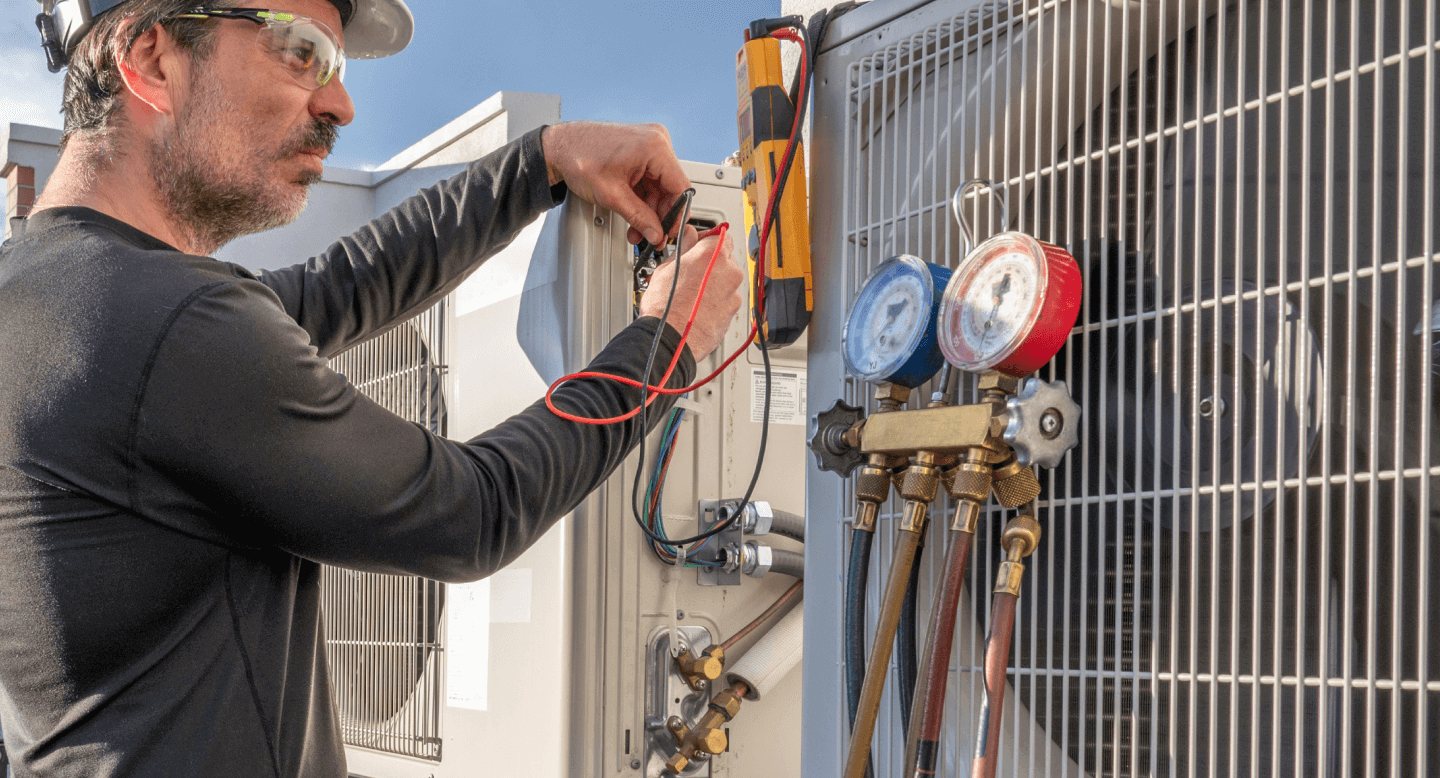
City & Suburban diagnoses before quoting, so a repair is priced against a named failure instead of a guess. One symptom hides many causes. Warm air at the registers can mean a dead compressor, a tripped high-pressure switch, a blocked condenser or a failed contactor. A real diagnosis reads the fault history and control sequence first, then measures refrigerant pressure, voltage and amp draw before a part comes off. Parts replaced on a hunch get paid for twice. A diagnosis built on those readings keeps the repair tied to the failure rather than to a brand.
What happens during emergency and routine commercial HVAC repairs?
Emergency and routine commercial HVAC repairs usually follow four steps. The complaint is confirmed with the person who reported it. The equipment and its controls are inspected, with electrical and refrigerant values measured where the fault calls for it. City & Suburban diagnoses the failure and puts the price in writing before work starts. A repair that needs no ordered part can often be finished in the first visit, depending on access and the fault. The quote is the place to ask for the expected sequence. Robert F., November 2025: "My heater went out at 5am. I called after 7am, technician showed at 8:30 to verify the issue and what part was needed."
What decides the cost of emergency and routine commercial HVAC repairs?
Six things decide the cost of commercial HVAC repairs. The failed part comes first, then whether that part is stocked and the labor the access takes. Refrigerant type and the amount lost matter on cooling faults. So does any electrical or control work, and the number of units on the roof. Rooftop access, ladders and curb-mounted equipment cost more time than a basement furnace. City & Suburban works on upfront pricing with no hidden fees. The price is put in writing before work begins, and that quote carries any offer that applies.
Which Chicago businesses can book these repairs?
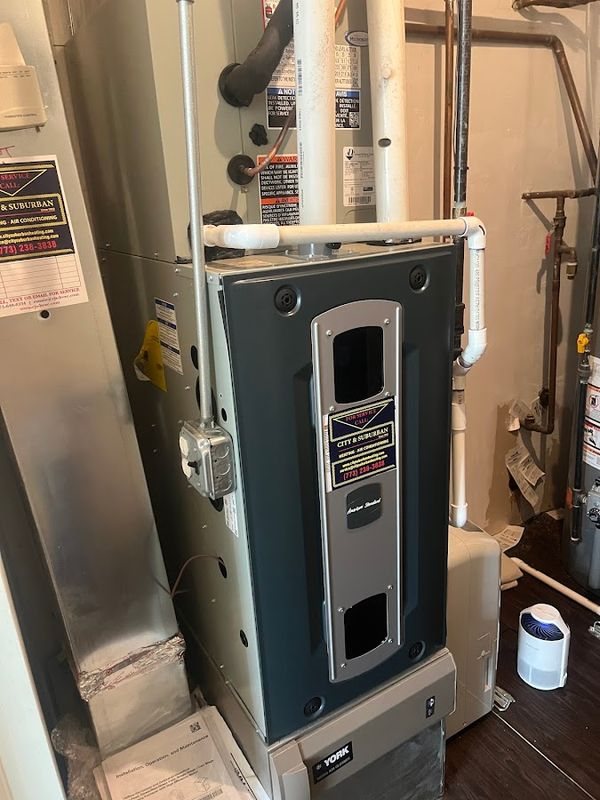
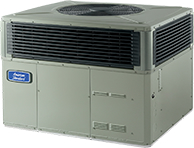
Emergency and routine commercial HVAC repairs fit light commercial work. Typical examples are storefronts, restaurants, salons, offices, clinics and mixed-use buildings running rooftop units, split systems, furnaces or packaged equipment. Repair sits inside City & Suburban's wider commercial HVAC service. Industrial process cooling, chiller plants, cooling towers and high-rise central plants on building automation are specialist work. A property manager with that equipment needs a mechanical contractor staffed for plant work.
How can routine commercial HVAC repair be booked around business hours?
Routine commercial HVAC repair can address noisy equipment, short-cycling, or a unit that runs but underperforms. Share business hours when booking the repair assessment. Same-day service is available when the schedule allows, which decides whether a sales floor loses hours or days of trading. A restaurant that needs the technician before the lunch rush rather than during it should say so when booking. Indoor access to a rooftop unit often runs through a dining room, so the route matters as much as the hour. City & Suburban diagnoses before quoting and puts the price in writing before any work. John, September 2025: "Rob was my technician and explained everything clearly and left the area clean."
When should commercial HVAC repairs give way to replacement?
Four signals say stop. The unit is past its service life. A second major failure lands inside a year. The refrigerant is an obsolete type costing more than the part. Or the repair closes in on the cost of new equipment. A common rule of thumb multiplies age by repair cost and treats $5,000 as the point to pause at. City & Suburban diagnoses the failure and puts the repair price in writing before work. An owner can also ask for a view of the unit's remaining life, which is an estimate rather than a certainty. The decision stays with the owner, and when new equipment is the better answer the job moves to commercial HVAC replacement.
Can routine commercial HVAC repair address a fault found on a scheduled visit?
Yes. Routine commercial HVAC repair addresses a diagnosed fault even when the system still runs. A scheduled visit may uncover underperformance, noise, or short-cycling before a complete outage. Record the finding and discuss repair access around business hours. Planned upkeep remains separate work on a schedule. City & Suburban maintenance plan members get priority dispatch. A written plan agreement should list what each visit covers, such as filter changes, coil cleaning, belt checks and control calibration. A business that calls only when something breaks pays for emergencies instead of inspections. Buildings with several rooftop units often consider a commercial maintenance plan after a first failure.
What proof is there that City & Suburban handles roof-mounted equipment?
Reviews name that work directly. Aranya T. called City & Suburban in September 2021 about a roof-mounted unit on a Chicago condo building. The complaint: "our roof air conditioning unit was leaking a greenish liquid and making a lot of noise." That review comes from a condo building, so it shows roof-mounted work rather than a commercial account. The visit was booked for the Monday of Labor Day weekend. The liquid proved to be harmless oxidation of copper pipe, and the noise was traced to charge, insulation and one failed part. City & Suburban holds a 4.98 average across 204 Google reviews and 4.9 from 251 reviews on Yelp, with an A+ rating from the BBB.
Who performs the repair work?
A NATE-certified technician does the work. City & Suburban is family-owned, running since 1952, and now led by Rob, the second generation of the founding family. The company prices upfront with no hidden fees, so the price follows the diagnosis rather than arriving before it. Whether an aging rooftop unit is worth repairing depends on its condition and parts availability, not on its brand. Larry V., July 2025: Rob "always comes out at a convenient time and his excellent service prevents problems from occurring."
What happens if the failed part is not on the van?
A van cannot carry every part for every make. When a part has to be sourced, a useful answer names where it is coming from and the likely wait. It also says what the business can run meanwhile. A partial measure often bridges the gap, such as one working stage or a setting that keeps a kitchen workable. City & Suburban prices the work upfront with no hidden fees, so confirm that the written price already includes the sourced part. Ken D., April 2026: Rob "explained what was needed, went and grabbed the part and had my heat working in no time."
How does a business pay for a repair?
The price is agreed before the work, not discovered after it. City & Suburban prices upfront with no hidden fees. An operator with several addresses should ask about payment and account terms when booking. Wells Fargo Home Projects financing is a consumer credit product subject to credit approval, so whether it can be used for a business repair, and by which applicant, must be confirmed before relying on it. Jens P., June 2026: City & Suburban "explained what they would do, when they would do it and did exactly as they said."
Is commercial repair work covered by a warranty?
Two warranties can apply to one repair. A replacement part usually carries the manufacturer's own warranty, and the labor that installed it may be covered separately under the contractor's own terms. Those terms belong in writing on the invoice rather than in a conversation, so ask for them before approving the work. City & Suburban works on upfront pricing with no hidden fees. Equipment still inside its original manufacturer warranty should be named when booking, because that can change who pays for the part.
What does the refrigerant phase-down mean for an older rooftop unit?
Refrigerant now shapes the repair-or-replace decision. An older rooftop unit may be charged with R-22, which is no longer produced in the US. Remaining supply is reclaimed, so the gas can cost more than the failed part. R-410A is being phased down in turn, and new equipment ships with lower-global-warming refrigerants instead. A small leak with a found-and-fixed cause is still a repair. A large charge loss on obsolete refrigerant is usually the signal to price replacement. City & Suburban puts the repair price in writing before work. The owner can ask which refrigerant the unit uses and how firm any remaining-life estimate is before deciding.
Can a certificate of insurance be issued before roof access?
Roof work usually needs paperwork before it needs a ladder. A landlord or property manager often asks for a certificate of insurance naming the building before a technician goes up. Roof keys, an escort or a booked access window come with it. Raising that at the time of booking keeps the first visit from becoming a wasted trip. Ask at booking whether a certificate can be issued and how long it takes, so any paperwork arrives before the visit. A tenant who does not control the roof should name the managing agent on the call, so access and the repair get arranged together.
After emergency or routine repairs, choose the right next step.

Request commercial HVAC repairs
Emergency or routine commercial HVAC repairs: share the site address, affected spaces, access and approval contacts, and business hours. Same-day service when the schedule allows.