
 Chicago local
 Family owned
 Since 1952
Service types
Energy-Efficient HVAC Upgrades Work We Handle
Common energy-efficient hvac upgrades jobs City & Suburban handles for Chicago homes and businesses.
Final recommendations follow the installed conditions, equipment instructions and applicable Chicago requirements.
Find the source of waste
Match the upgrade to the operating problem
These patterns help identify questions for a technician, from unnecessary run time to air that misses occupied spaces. Bring bills, opening hours and control records. An existing fault may need attention before an efficiency project.
Pricing
What shapes the upgrade cost and payback?
The project price and the energy benefit answer different questions. City & Suburban provides upfront pricing with no hidden fees. Compare each option against the same operating baseline, including business hours and comfort needs. An inexpensive control change may address wasted run time; an equipment upgrade needs a broader comparison of installed cost and expected use.
How City & Suburban prices every job
- 1 Diagnosis firstA technician finds the cause before anything is quoted.
- 2 Written price before any workThe exact price, in writing, for approval.
- 3 No hidden feesThe approved price is the price.
- 4 Repair first where repair is rightReplacement only when the evidence supports it.

Financing available
Wells Fargo Home Projects credit card, subject to credit approval; eligibility for business projects must be confirmed.
Open 24 hours, 7 days a week
24/7 service, whatever the size of the job
A small fix or a full breakdown, City & Suburban answers around the clock, every day of the week. Call any time, day or night, and describe the problem.
- Big jobs and small jobs
- Day, night and weekends
- One number: (773) 238-3838
Choose the next useful investment
Improve existing operation or invest in higher efficiency?
Retaining working equipment may make sense when the waste comes from schedules, control setup or duct leakage. High-efficiency equipment deserves a closer look when condition and operating needs support the investment. Compare the additional efficiency benefit separately from costs needed simply to restore service. For a project centered on renewing worn equipment, see commercial HVAC replacement.
Simple payback divides net upgrade cost by estimated annual energy savings. Check the assumptions; this calculation does not promise a return. Service-life ranges are general equipment guidance, not City & Suburban measurements. Maintenance, operating hours and condition can change the useful life.
Equipment types
Equipment and controls have different jobs
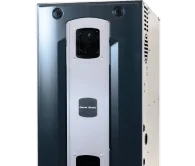
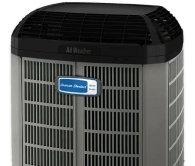
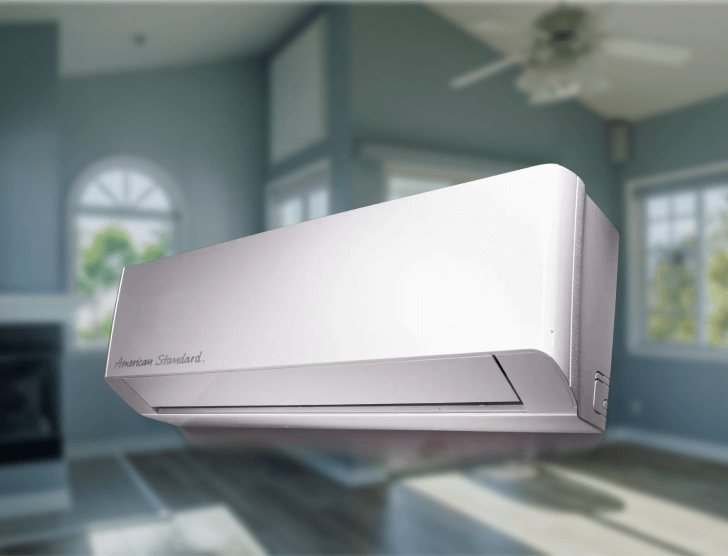
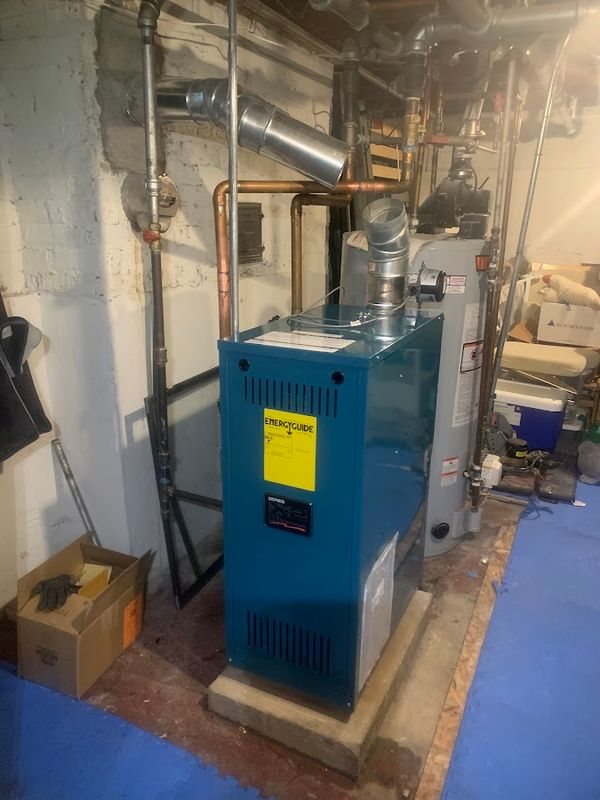
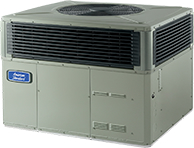
American Standard equipment

Plan the work around business use
City & Suburban provides upfront pricing with no hidden fees. A planned project needs a written scope covering access and interruptions. Packaged rooftop units and controls need coordination with occupied areas and staff permissions. Plan the sequence: reach out, site walkthrough, written findings and options, quote in writing, staged installation, then settings documented at handover. Confirm this sequence with the contractor before work begins.
How it works
How a City & Suburban visit works
-
Reach out Call, text or book online.
 1
-
Pick a time Same-day visits when the schedule allows.
 2
-
On-site visit A technician diagnoses the problem.
 3
-
Honest pricing The price, in writing, before any work.
 4
-
Approved work Only the work you approve, then tested.
 5
-
Clear results Findings and next steps explained.
 6
Reviews
What customers say about the service
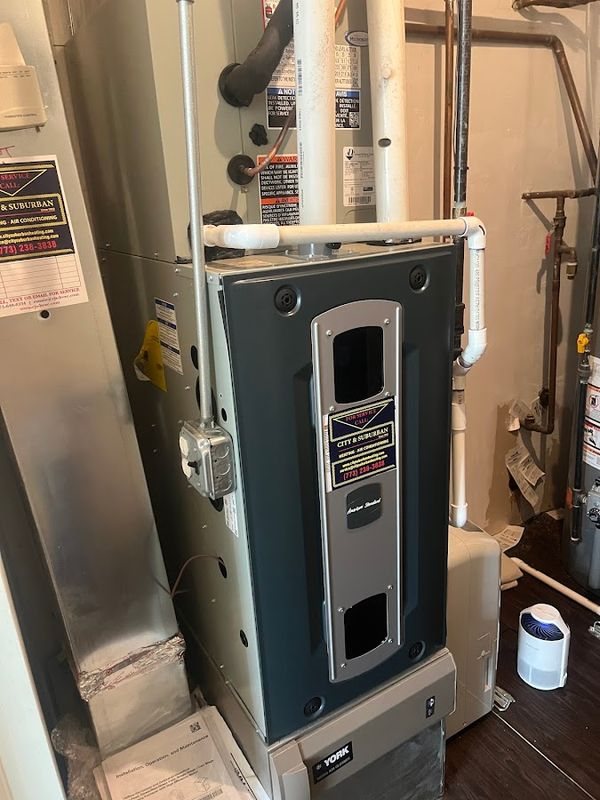
City & Suburban averages 4.98 across 204 Google reviews. These customer accounts describe service, installation and communication; they do not establish commercial energy savings. The installation photo shows a furnace with a City & Suburban service sticker; it does not document a commercial efficiency project.
“I had a 2-stage furnace and thermostat installed by Eddie and Mike in my condo's custom utility closet. Installation was challenging and they professionally, patiently, and expertly completed the job.”
“The whole C&S team have been wonderful both in servicing our original furnace and air conditioning systems and with a full HVAC replacement this spring. They are knowledgeable, clear in their assessments and communication, reliable, courteous and mindful of our budget and needs. Highly recommended!”
“We worked with Eddie and he was efficient, skilled, and reliable. Our HVAC was making a loud noise and he was as able to identify the challenge, pick up the necessary part, and install it within a few days.”
“The tech was incredibly knowledgeable, efficient, and kind. I can’t say enough good things about City & Suburban Heating & Cooling.”
“City & Suburban has serviced our HVAC system twice, over 5 years apart. Each experience was positive. They addressed our needs, answered our questions, and didn't try to upsell us. Both techs were very friendly and knowledgeable. Today, Eddie showed up when expected and fixed our AC within 45 minutes. If you call the office, you may not get an answer if they're busy. But we entered a service request on their website and got a call back.”
“Rob and the team at City Suburban are top notch. I’ve been using them for several years now for annual checkups of my system and have nothing but good things to say. He is respectful of my space, my questions, and has always been punctual. No upsells, just what I need for reliable AC and heat throughout the year. They’ve always been accommodating meeting my scheduling needs, as well. Highly recommend!”
City & Suburban work in Chicago
Service areas
Chicago businesses and nearby service areas
City & Suburban serves 21 areas across 13 Chicago neighborhoods and 8 suburbs. Include the business location and access requirements when requesting a quote. Explore the wider commercial HVAC service category.
Chicago neighborhoods
North and northwest suburbs
View the listed service areas and confirm access requirements when requesting an appointment.
Based in West Town
1225 N Cleaver St, Chicago, IL 60642. Technicians cover the city and the north and northwest suburbs.
Not on the list? Call (773) 238-3838 to check an address outside these 21 areas.
Call City & SuburbanQuestions about commercial HVAC efficiency upgrades
What counts as an energy-efficient HVAC upgrade in a Chicago commercial building?
An efficiency upgrade is any change that cuts the energy a building uses for the same comfort. Five items usually make the list. High-efficiency furnaces, boilers or heat pumps come first, then controls and scheduling. Zoning follows, so empty space is not conditioned. Economizers that use cool outside air and duct sealing complete it. The five are worth assessing together, because controls and duct leaks cap what a new unit's rating delivers. Repairs that only restore normal operation are not efficiency gains, so a fair comparison keeps the two apart.
Where does City & Suburban start before any new equipment is quoted?
The starting point is the building as it runs today, not a catalog. That means nameplate data and age on each unit, thermostat schedules and setpoints, filter and coil condition, and where the conditioned air goes. City & Suburban has NATE-certified technicians and diagnoses before anything is quoted, so the findings come before any equipment choice. Two cheap findings come up often: a schedule that never matched occupancy, and a system fighting duct leaks.
What decides the cost of an energy-efficiency upgrade?
Six things move the number. The condition of the installed equipment comes first, then how well current controls suit new equipment. Next is the scope of zoning and duct sealing, and the labor to install the equipment, including roof access and any curb adapter. Operating hours, utility rates and rebate paperwork finish the list. Condition, controls, scope and labor set the project price; operating hours and rates decide how quickly savings could repay it, and confirmed rebates change the net cost, so a useful proposal keeps them apart. City & Suburban works on upfront pricing with no hidden fees, with the exact price in writing before work.
What happens on the first visit, and how long does it take?
The first visit is a walkthrough, not an installation. A useful walkthrough reads each nameplate and checks combustion or refrigerant performance where it applies. Thermostat schedules, reachable duct runs and return paths follow, with a note of which spaces run too warm or too cold. Length depends on how many units the building has and how many can be reached. Before the visit, ask what record of the findings and options will be provided, and whether every unit will be looked at. City & Suburban diagnoses before anything is quoted, puts the exact price in writing before work, and offers same-day service when the schedule allows.
How disruptive is the installation, and can the work run outside business hours?
Much of an efficiency project can be staged, depending on access and the written scope. Controls, thermostats and duct sealing go zone by zone, with the system down for short stretches. Equipment swaps are the disruptive part, so one unit at a time keeps the rest of a building running. Christopher A. described a rooftop job in June 2025: "The install crew was friendly, professional and showed up on time. They get full marks for hauling the equipment up five flights of stairs to the roof!"
Do controls and smart thermostats really cut a building's energy use?
Controls can be a lower-cost lever, and they are often left on a factory schedule. Cost and effect depend on compatibility with the existing equipment and the installation scope, and an inexpensive change is not always enough. A connected thermostat saves energy only when its schedule matches the hours a space is used. Schedules, setbacks and lockouts should be set at commissioning and written down. A building then stops heating empty offices at 2 a.m. Many commercial setups still run the default schedule from the day of installation. Measured energy use before and after the change is the fair test of any savings claim.
How high an efficiency rating is worth paying for in Chicago?
A long heating season is what makes efficiency ratings pay here. An 80% furnace sends roughly a fifth of its fuel up the flue. A 95% to 98% condensing unit does not, but it needs sealed venting and a condensate drain. The rating has to match the venting, the gas supply and the hours a system runs. City & Suburban puts the exact price in writing before work, so the extra cost of a higher rating can be compared directly. A high rating on an oversized unit that short-cycles returns less than a smaller one sized right.
What does an economizer do, and which Chicago buildings suit one?
An economizer brings in cool outside air instead of running compressors. That pays most in spring and fall, when a building still needs cooling for people and equipment. Server rooms, kitchens and busy offices with high internal heat gain benefit most. The catch is upkeep. Stuck dampers and failed sensors are common, and a broken economizer can pull in humid summer air. A maintenance agreement for a building that relies on one should list damper and sensor checks. City & Suburban maintenance plan members get priority dispatch.
What does zoning fix that a larger unit cannot?
Zoning can help when the problem is distribution rather than capacity, but it is not an automatic cure. Uneven temperature can also come from the building envelope, a changed load, too little capacity, control settings or the duct layout, so the cause needs diagnosing first. In long Chicago storefronts and converted loft floors, one thermostat reads one spot. The far end runs warm or cold, staff override the setpoint, and the system works harder. Where distribution is the cause, adding capacity tends to make that worse. The fix may then be dampers and separate control zones where the duct layout allows, or ductless mini-splits where it does not. City & Suburban diagnoses before anything is quoted.
Does duct sealing belong in an efficiency project?
Leaky ducts waste paid-for efficiency before the air reaches anyone. In commercial buildings those runs often sit above ceilings or in unconditioned shafts. Sealing joints, reconnecting dropped takeoffs and fixing return paths can buy more comfort per dollar than a higher rating does. Sealing is not a fix for every airflow complaint, though: an undersized branch or a missing return path needs a different correction. Measuring where the air goes belongs before equipment is chosen, and heavier rework becomes a commercial duct design project. City & Suburban diagnoses before anything is quoted.
How are the savings from an efficiency upgrade checked after commissioning?
Savings are checked by comparing energy use before and after the work on the same basis. That needs a baseline of utility bills across the seasons, adjusted for weather, operating hours, occupancy and rate changes. Controls deserve a second look some weeks after commissioning, because overrides and schedule edits can quietly undo the result. Where an incentive program sets its own measurement rules, those rules decide what counts. A lower bill alone does not prove the HVAC change worked, and a higher one does not prove it failed. A proposal should state which inputs its savings estimate used, so the follow-up comparison tests the same assumptions.
Who should a Chicago building owner call about utility incentives?
The utility account manager for the building is the first call. Program terms and budgets are set each program year by the utility, not by the contractor. Four questions settle it. Which measures are covered this year? Is pre-approval needed before equipment is ordered? Who files the application, the owner or the installer? What proof of the installed model and its rating is required? The written quote is where the model and the rating come from, so keep it with the application.
Does an efficiency upgrade need a City of Chicago permit?
Replacing HVAC equipment in Chicago generally needs a City permit, though the requirement depends on the scope and should be confirmed with the City. Chicago publishes building permit records, which typically show the reported value of the job, so similar work in nearby buildings can be looked up. The written quote should say who pulls the permit. Controls, thermostat and duct sealing scopes may not need a permit, and that is worth settling before a schedule is set, because review time is part of the timeline.
Which buildings are not good candidates for an efficiency upgrade?
Three cases argue against one. Equipment already past its service life will not justify new controls layered on top, which makes it a commercial HVAC replacement conversation instead. A building heading into a sale or a gut renovation should wait for the new load. And a tenant who does not control the mechanical equipment cannot authorize the work. City & Suburban diagnoses before quoting, so a repair can still be priced when an upgrade does not pay off.
Is any part of an efficiency upgrade urgent or a safety matter?
Most of it is planned work, with two exceptions. Combustion equipment is the safety item. With a gas smell or a sounding carbon monoxide alarm, everyone leaves the building first and calls 911, or the gas utility for a gas odor, from outside; it is not an upgrade question. Timing is the second exception. Heating work is easiest to stage outside the heating season, and cooling work outside summer. That keeps the building from losing the system it needs most. City & Suburban offers same-day service when the schedule allows.
What proof stands behind City & Suburban on upgrade and replacement work?
City & Suburban has been family-owned since 1952 and is run by Rob, second generation of the founding family. The record is public: a 4.98 average across 204 Google reviews and an A+ rating with the BBB. Most of those reviews come from homes and condos, so they show diagnosis and communication rather than measured commercial energy savings. Kavan K. wrote in September 2025: "Their techs are more knowledgeable, they solved a months long issue we were having in just a few minutes that several other companies' techs could not figure out after several appointments."
Related commercial HVAC services

Start with the building and its operating hours
City & Suburban offers upfront pricing and NATE-certified technicians. Send the business location, current equipment information and the main source of concern.