
 Chicago local
 Family owned
 Since 1952
Commercial airflow problems
Find the distribution problem. Define the right ductwork scope.
A Chicago storefront build-out can change room comfort without changing the equipment. The cards below separate layout problems, balancing needs, leaks, and noise so the building team can prepare useful observations for an assessment.
Pricing
What decides the commercial ductwork price?
City & Suburban offers upfront pricing with no hidden fees. A useful ductwork quote separates the distribution work from related construction and equipment work. The price depends on access, design changes, repair extent, and the arrangements needed to complete the project in an occupied building.
How City & Suburban prices every job
- 1 Diagnosis firstA technician finds the cause before anything is quoted.
- 2 Written price before any workThe exact price, in writing, for approval.
- 3 No hidden feesThe approved price is the price.
- 4 Repair first where repair is rightReplacement only when the evidence supports it.

Financing available
Wells Fargo Home Projects credit card, subject to credit approval; eligibility for business projects must be confirmed.
Repair, rebalance, or redesign
Keep sound duct sections. Change what no longer fits.
Retain sound duct runs that still fit the rooms. Reseal a separated joint; replace a crushed section; resize a branch when room use changes. Age alone does not decide the scope. City & Suburban diagnoses before quoting and provides upfront pricing with no hidden fees.
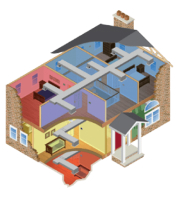
Commercial duct system components
Follow the air path. Match the duct to the room.

Build-out sequence: plan through final balance.
Start with a coordination drawing showing routes, room use and approval responsibilities. Confirm fabrication lead time before setting the rough-in date. Install runs before ceiling closure, then balance airflow and retain an as-built damper record. Equipment work has a separate scope under commercial HVAC installation.
How it works
How a City & Suburban visit works
-
Reach out Call, text or book online.
 1
-
Pick a time Same-day visits when the schedule allows.
 2
-
On-site visit A technician diagnoses the problem.
 3
-
Honest pricing The price, in writing, before any work.
 4
-
Approved work Only the work you approve, then tested.
 5
-
Clear results Findings and next steps explained.
 6
Reviews
Customer accounts of communication and repair work
“Rob and team were very responsive and did great work.”
“City & Suburban were the only ones that explained what they would do, when they would do it and did exactly as they said without charging an absurd amount of money.”
“Rob quickly diagnosed the problem, explained what was needed, went and grabbed the part and had my heat working in no time.”
“They reviewed my options and helped me make the decision between repair and replace.”
“Clear communication, reasonable rates, kindness, dependability, and quality workmanship.”
“He can actually make repairs and not just replace everything.”
City & Suburban work in Chicago
Service areas
Commercial ductwork requests across Chicago and nearby suburbs
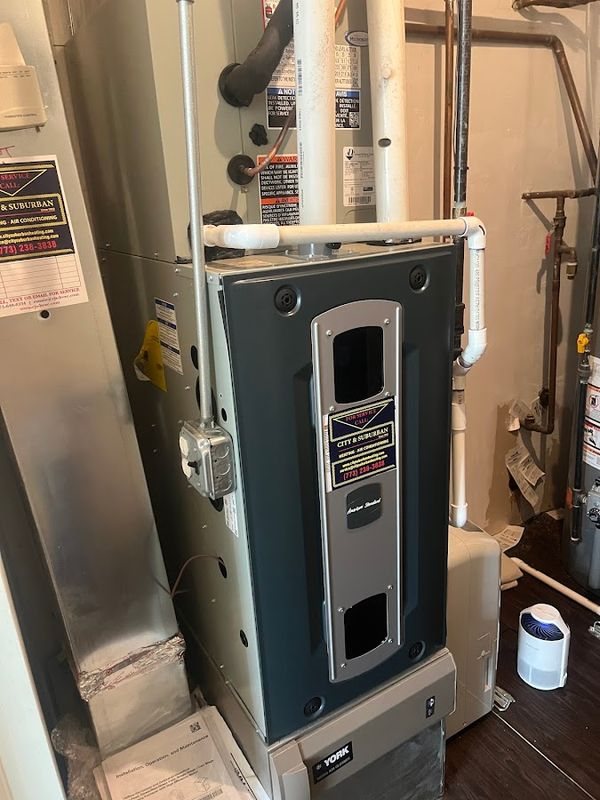
City & Suburban serves 21 areas: 13 Chicago neighborhoods and eight suburbs. Share the project address and building access details when requesting an assessment. The commercial HVAC page covers related commercial service requests.
Chicago neighborhoods
North and northwest suburbs
Confirm the project address and access arrangements when booking.
Based in West Town
1225 N Cleaver St, Chicago, IL 60642. Technicians cover the city and the north and northwest suburbs.
Not on the list? Call (773) 238-3838 to check an address outside these 21 areas.
Call City & SuburbanCommercial ductwork questions
What does commercial ductwork design and repair include in a Chicago building?
Commercial duct work covers everything between the fan and the registers. That means trunk and branch sizing, damper positions, sealed seams, insulation, return air paths and noise control. Design work redraws the layout when walls move or a space changes use. Repair work fixes runs that leak, sag, sit crushed above a ceiling grid, or were never sized for the load. It fits offices, retail units, restaurants, clinics, small industrial spaces, and condo or association common areas. City & Suburban coverage runs to 21 service areas, 13 Chicago neighborhoods and 8 suburbs, alongside the rest of the commercial HVAC scope in the same building.
Is this duct cleaning, or duct repair and redesign?
Duct cleaning removes dust and debris from inside existing runs and changes nothing about the layout. Duct repair and design change the system itself: sealing joints, replacing a crushed section, resizing a branch, moving a run, setting dampers. A clean duct that was never sized right still starves the same room. The service-call coupon on this page excludes duct cleaning, so a cleaning search lands in the wrong place. Routine checks and cleaning sit on duct maintenance, and a single leaky run in a house or two-flat sits on duct repair. City & Suburban diagnoses before quoting, so the visit starts by confirming which kind of work the building needs.
How does City & Suburban approach a duct problem differently from a replacement quote?
Many duct proposals price new metal, because new metal is easier to estimate than a diagnosis. The cheaper answer is often a resized branch, a sealed seam, or a damper set correctly. City & Suburban has been family-owned since 1952 and is run by Rob, the second generation of the founding family. Technicians on commercial calls are NATE-certified. Calvin G. wrote in April 2025: "He can actually make repairs and not just replace everything." That instinct matters on duct, because faults are usually local and a new system inherits the same layout.
How is uneven temperature between rooms or floors actually corrected?
Order matters more than equipment. Walls move during a build-out while the registers stay put. A trunk drawn for an open floor plate then ends up feeding closed offices. A new demising wall can cut off the return path a floor depended on. Airflow comes first, because a room starved of air cannot be fixed at the controls. Balancing dampers get set, undersized branches get resized, and blocked or missing returns get opened. Only after that does zoning or a control change make sense. City & Suburban puts the exact price in writing before any work, with no hidden fees. Reversing the order is how a building ends up with new controls and the same cold corner office.
What are the signs that a duct run is leaking or badly undersized?
Rooms that never reach setpoint while the equipment runs without stopping. A system loud at the unit and weak at the register. Dust arriving in a space that should be clean. Doors that pull hard against the frame or slam shut. Leaking duct spills conditioned air into a shaft or plenum nobody occupies. Undersized runs raise static pressure until the fan moves less air than the design assumed. City & Suburban diagnoses duct faults before anything is quoted. Tighter duct belongs with the other energy-efficient upgrades worth doing in the same visit.
How is a commercial duct design actually produced?
A sound design starts with measurement, not a drawing. The survey should record room sizes, occupancy, equipment capacity and the runs that already exist. Airflow at each register and the static pressure across the fan, filter and coil show what the existing duct can carry. Duct sizing then follows from the air each space needs, and trunk, branches and return are drawn to carry it at a speed that stays quiet. Damper positions should be recorded, so the balanced settings can be checked next season. A design proposal should state which measurements it rests on. City & Suburban diagnoses the problem before anything is quoted, and the exact price goes in writing before work starts.
Can noisy ducts in an office or retail space be quieted?
Usually, and often without new equipment. Duct noise has three sources. Air moves too fast through an undersized trunk, bare metal radiates fan noise, and vibration travels through hangers or a roof curb. Resizing, lining and isolation address each one. City & Suburban has worked on Chicago buildings since 1952, including roof-mounted equipment over occupied space. Aranya T. described vibration work on a condo roof unit in September 2021, where Rob "added some extra insulation to cut down on vibrations". The technicians on site are NATE-certified.
What decides the price of a commercial duct project?
Scope, access and timing decide it. The count and length of runs matters, and so does how much duct sits above a finished ceiling. Material choice moves the figure, whether galvanized sheet metal, spiral duct, or flexible runouts, each carrying its own labor. So does the sealing method, whether mastic over mesh, foil tape on a clean joint, or an aerosol sealant pushed through a pressurized system. Insulation or internal liner, and the number of dampers and registers added, add cost. After-hours work in an occupied space, roof access, and alterations large enough to need a permit add time. City & Suburban puts the exact price in writing before work begins, with no hidden fees.
What happens on the first visit, and how long does the work take?
A technician finds the cause before anything is quoted. On a duct complaint, a useful assessment covers airflow in the affected rooms, the route of the affected runs and what is reachable above the ceiling. Small work such as sealing a joint or setting a damper can sometimes be finished in one visit, depending on access. Balancing a whole floor takes longer. A build-out redesign is usually scheduled around the other trades, because duct goes in before the ceiling closes. City & Suburban offers same-day service when the schedule allows, plus emergency HVAC service every day till midnight, except Sundays.
When does a duct fault become urgent rather than a comfort complaint?
Three cases call for prompt attention. Return air drawn from a room with gas-fired equipment can starve combustion air and cause backdrafting. That risk matters most in a mixed-use building over occupied apartments. If a carbon monoxide alarm sounds or gas is smelled, everyone leaves the building first and calls 911, or the gas utility for a gas odor, from outside. A kitchen exhaust hood without matched makeup air puts a whole space under negative pressure. A collapsed or disconnected return in January leaves tenants cold. City & Suburban runs emergency HVAC service every day till midnight, except Sundays. The equipment side of those calls runs through emergency commercial repair.
Does changing ductwork in a Chicago building need a permit?
Often, and scale decides the path. Many mechanical alterations in Chicago need a City of Chicago permit, and a like-for-like duct repair may be treated differently from a new layout tied to a build-out, so confirm the requirement for the specific scope with the City before work is scheduled. Mixed-use buildings can carry a second obligation. Where the landlord supplies heat to apartments, the Chicago Heat Ordinance (Municipal Code 13-196-410) sets minimums for those dwelling units: at least 68 degrees from 8:30 a.m. to 10:30 p.m. and 66 degrees overnight, from September 15 to June 1. Heat in commercial-only space is usually a matter for the lease. City & Suburban settles scope and price in writing before work starts.
What about fire and smoke dampers in an occupied building?
Rated walls, floors and shafts are built to hold back fire and smoke, and duct that penetrates one is normally fitted with a fire or smoke damper at the crossing. Those dampers close on heat or on a smoke signal, and the opening has to stay accessible so the damper can be inspected and reset. Rerouting a branch or adding a supply through a corridor wall touches that barrier, which makes a route change a code question and not only a sheet metal question. Larger alteration work may need a City of Chicago permit, so confirm the requirement for the specific route. City & Suburban settles scope and price in writing before work starts.
Who pays for commercial duct work, the landlord or the tenant?
That gets settled before scope is agreed, because it decides who approves the price. A lease usually splits it: building systems serving the whole structure sit with the landlord, while changes made for one tenant's layout sit with the tenant. A build-out often has both, a rooftop unit on the landlord's side and new branches and diffusers on the tenant's. Naming the approver first avoids a finished scope nobody will sign. City & Suburban puts the exact price in writing before any work, with no hidden fees, and a technician finds the cause before anything is quoted.
Can duct work be staged while a space stays open for business?
Often, depending on access and the scope in the written proposal. Sealing and damper work can usually be done zone by zone, and whether ceiling tiles go back the same day depends on the area opened and the building rules. Noisy cutting can be grouped into after-hours or weekend blocks where the building and the proposal allow it. Phasing usually adds some labor in exchange for keeping a floor open. The staging plan belongs in the written scope, where the exact price is set before any work and no hidden fees follow. City & Suburban offers same-day service when the schedule allows, and emergency HVAC service every day till midnight, except Sundays.
What track record stands behind the duct work on a commercial job?
City & Suburban averages 4.98 across 204 Google reviews and holds 4.9 from 251 Yelp reviews. The company carries a BBB A+ rating and has been family-owned since 1952. Most of those reviews come from homes and condos, so they speak to communication and site access rather than to commercial duct design or balancing. Christopher A. wrote in June 2025 about an install that needed roof access. "They get full marks for hauling the equipment up five flights of stairs to the roof!" The technicians on site are NATE-certified. A building owner comparing contractors can ask for examples of comparable commercial duct projects.
What keeps the airflow right after the duct work is finished?
Three habits hold the result. Filters stay the size and depth the system was set up for. Changing filter size, depth or MERV changes the resistance the balance was set against, in either direction. Damper positions get recorded, so nobody resets a damper by guess next season. Airflow gets rechecked each season, which is where duct maintenance belongs. City & Suburban maintenance plan members get priority dispatch, and plan options sit on the commercial maintenance plan page. Wells Fargo Home Projects financing is a consumer product subject to credit approval, so eligibility for a business project must be confirmed first.
Related commercial HVAC services

Start with the spaces that need better airflow
Send City & Suburban the project address, floor plan, symptoms and proposed changes. Include business hours and the building contact for access.